
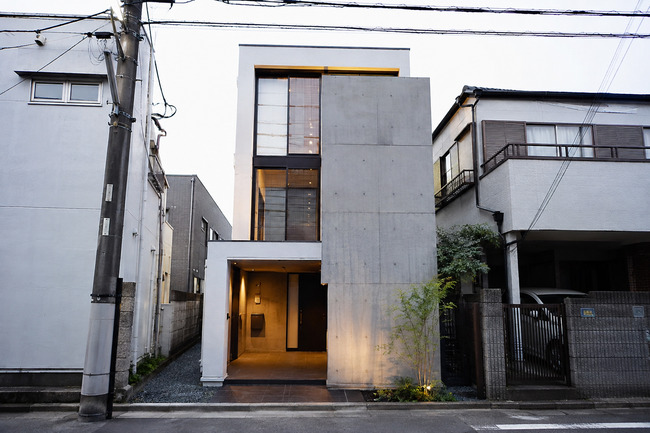
When I lived in Japan, one thing on my street took me a while to get used to. A two-storey house that had stood for years would, one morning, be gone, flattened to an empty lot, and a few months later a new building sat on top of it. Nobody complained. Nobody talked about “protecting the property value.” They just built.
Years later that image lines up with a figure that’s gone viral: Tokyo, a single city, builds as much housing in a year as the whole of Spain, sometimes more. It sounds like an exaggerated headline, but the numbers hold up. I want to walk through why Japan builds more housing than Spain, what’s actually true in that comparison, and which lesson genuinely applies in Barcelona (and which one we’re better off leaving alone).
My conclusion, up front: Japan builds more because it decided, by law, to make building easy. Spain builds little because it decided the opposite. But the Japanese model has a flip side that rarely makes the headlines, and it changes the moral of the story quite a bit.
Does Tokyo really build more housing than Spain? The numbers
Yes, it’s true, with one important caveat worth keeping in mind before you repeat the headline.
How much Tokyo builds in a year
Tokyo approved around 145,000 new homes in 2018, with a population of 13.5 million (Xataka, drawing on the Financial Times). In some years that beats what California builds (three times the population) or England (four times). The striking part: nearly all of those homes went up inside existing neighbourhoods, not on greenfield land.
This wasn’t a one-off spike. Tokyo has tripled its housing stock in fifty years and has kept adding to it at close to 2% a year since 2000, even after its population stopped growing.
How much Spain builds
Spain completed 100,980 homes in 2024, its best figure in twelve years, according to the Observatorio de Vivienda y Suelo (the Housing Ministry’s housing and land observatory). That same year it started 136,187, the most in fourteen years. The trend carried into 2025: the fourth quarter was the strongest fourth quarter for home construction in seventeen years.
The recent figures sharpen the headline. Over the past decade Spain built somewhere between 40,000 and 90,000 homes a year, and against that Tokyo ran away with it. In raw numbers, the gap has now narrowed.
The fair comparison is per capita
This is where the argument becomes hard to dispute. Instead of comparing a city with an entire country, look at the ratio per head of population:
- Tokyo: about 10.7 homes per 1,000 residents (2018).
- Spain: about 2.1 per 1,000 residents (2024, its best recent year).
Tokyo builds roughly five times more housing per resident than Spain, and that’s measuring Spain at its strongest in over a decade. Five times over. The scale of the contrast is real, even if comparing a city with a country always limps a little.
| Tokyo | Spain | |
|---|---|---|
| Population | 13.5M | ~48.6M |
| Homes per year | ~145,000 (2018) | 100,980 completed (2024) |
| Homes per 1,000 residents | ~10.7 | ~2.1 |
| Land regulation | National | Regional and municipal |
Why Japan builds so much: four things we don’t have here
The underlying reason is single and simple: in Japan, building housing is easy by legal design. It comes down to four mechanisms.
Land is regulated by national law, not town by town
In Japan the rules on land use are set by the central government, not by each town hall. That strips a lot of blocking power from local interests, the kind that stall developments for years elsewhere. National authority overrides “not in my backyard.”
In Spain it’s the reverse. Planning sits with the regions and the municipalities, and any permit can turn into a long negotiation.
Zoning that adds uses instead of banning them
The Japanese system has 12 zone types (13 since 2018), far fewer than the average Spanish or American city. And they work in an unusual way. Instead of saying “housing only here,” they set the maximum level of nuisance allowed in each zone.
The practical effect is huge. You can build housing almost anywhere, because 11 of the 12 zones allow it. A factory can’t move into a residential neighbourhood, but a home can go into a light-industrial zone. And residential means residential, with no distinction between a rental flat, a detached house, or an apartment block. That flexibility multiplies the land available for housing (Mutuactivos).
Permits by right: meet the rules and you get it
In Japan permits work “by right.” If your project meets the technical and regulatory requirements, the authorities are obliged to approve it. There’s no discretionary stage where the project gets tangled up in political or neighbour pressure (El Imparcial).
Less uncertainty for the builder means more building. Easy to grasp, hard to copy.
The house that loses value (and why that unlocks construction)
This one is the most cultural, and the most interesting. In Japan a timber home loses almost all its book value in about 20 to 30 years. After that, the bank values the property as if only the land existed. The scrap and build mentality dominates, inherited from the postwar years and reinforced by earthquake-safety rules.
This is the link almost nobody makes: if your house doesn’t gain value, you have no reason to block the development next door “to protect your investment.” Take away that brake, and housing flows.
The four differences with Spain, in short:
- Land regulation: national in Japan, regional and municipal here.
- Zoning: inclusive (adds uses) there, exclusive (separates uses) here.
- Permits: by right there, with room for discretion here.
- Home value: depreciates there, appreciates here.
The flip side the viral headlines leave out: 9 million empty homes
Look closer, though, and the model has an uncomfortable underside. Japan sits on some 9 million empty homes, close to 14% of its stock, the so-called akiya (idealista). The same machine that produces cheap housing in Tokyo leaves entire villages abandoned.
What akiya are
Akiya (空き家) literally means “empty house.” These are homes left unoccupied for more than a year, many of them inherited and never sold, concentrated in the rural Japan hit hardest by ageing and population decline. Some towns give them away in exchange for renovating them.
Building a lot has a price
A depreciating house unlocks construction, yes, but it also means housing barely builds any wealth. In Spain your flat is a big chunk of your lifetime savings. In Japan, for many families, it’s a good that gets used up and thrown away. Add the environmental cost of demolishing and rebuilding every few decades, and the balance sheet looks less tidy.
Why the Japanese model can’t be copied wholesale in Spain
A few deep reasons. Our culture treats housing as an investment and an inheritance, not a perishable good. Planning is in the hands of the regions and municipalities, not the central government. And the demographics run the other way: Spain’s population is growing, Japan’s has been falling for more than fifteen years, so across much of the country there’s land to spare.
Copying the whole Japanese system wouldn’t fix Spain’s problem. But a few individual pieces would be worth having.
Barcelona, the city where you can barely build new housing
In 2025 the city’s quarterly average of new-build permits hovered around 300 homes, less than half the 2022 figure (Ajuntament de Barcelona). There’s almost no free land left to build on.
What I would take from Tokyo
Speed. Not the demolition culture, but the idea that a clear, predictable permit unblocks supply. In a city like Barcelona, where paperwork can drag on forever, learning from that Japanese predictability would make complete sense.
What I wouldn’t import: demolishing instead of renovating
When you can’t grow outward, you grow inward. Here we call it a remonta: adding a floor on top of an existing building, a common move in the Eixample. Reusing the building that’s already standing instead of knocking it down is the exact opposite of Japan’s scrap and build. And in a city with Barcelona’s heritage, it’s also the sensible thing to do.
At Nomadas Architecture we work along exactly those lines: bringing out the value in what’s already there, the historic parts of a building, and pairing it with contemporary work. We don’t think building fast and building a lot is the only answer. In an urban fabric this dense and this full of memory, renovating well usually beats tearing down. Residential renovation is in fact one of the fastest-growing segments in Spain right now, with refurbishment permits at record highs.
Frequently asked questions
How many homes does Tokyo build a year?
Around 145,000 in 2018, with a population of 13.5 million. It’s the most cited reference figure and works out to about 10.7 homes per 1,000 residents.
Does Japan build more housing than Spain per capita?
Yes. Tokyo builds about five times more housing per resident than Spain, even when you compare it against 2024, Spain’s best year in over a decade.
Why don’t housing prices in Tokyo climb the way they do in Barcelona or Madrid?
Because supply grows at the pace of demand. When you build enough, prices don’t shoot up. In cities where supply is blocked, the opposite happens.
Why are so many houses demolished in Japan?
Because homes depreciate to almost nothing in 20 to 30 years, and the demolish-and-rebuild mindset dominates, reinforced by earthquake regulations.
Could Spain apply the Japanese housing model?
Only in part. Faster permits would help, but the disposable-housing culture clashes with how we understand property and inheritance, and with demographics that, unlike Japan’s, keep growing.
So: build or preserve?
Japan doesn’t build more by magic. It builds more because decades ago it chose to make building easy, and that’s the idea that really counts: this is a political decision, not a cultural mystery. Like any decision, it comes with fine print.
The main threads, one line each:
- National regulation: less local veto, more housing.
- Inclusive zoning: housing fits almost anywhere.
- Permits by right: meet the rules, you build.
- Depreciating homes: unlocks supply, but builds no wealth and multiplies the akiya.
The most cited Tokyo figures are from 2018 and the Spanish ones move every year, so it’s worth checking the current number before taking it as gospel. And be careful with the city-versus-country comparison. It’s powerful, but imperfect. The number that holds up is the one per resident.
My view, after living there and renovating here: we don’t need to copy Japan, we need its speed without its throwaway culture. Barcelona doesn’t get fixed by demolishing. It gets fixed by making it easier to renovate and bring back to life what’s already standing.
How do you see it? Would you rather have a city that builds nonstop or one that looks after and reuses what it already has? Tell us in the comments. And if you’re mulling over renovating your home in Barcelona, get in touch.

