I always say that choosing an architect is like finding a partner: you need trust, shared values, and a common vision. And if you see any “red flags,” it’s better to look elsewhere.
In this post, we are going to break down how to find that professional who will turn your ideas into livable spaces. From project definition to permit management, we will guide you to ensure your investment is safe and your future home is exactly as you dreamed it.
Why is it crucial to choose the right architect?
Choosing the right architect guarantees the technical, legal, and economic viability of your investment, avoiding cost overruns and long-term structural problems.
The architect is the conductor of your project’s orchestra. They don’t just draw plans; they coordinate trades, ensure compliance with the Technical Building Code (CTE in Spain), and optimize energy efficiency.
A poor choice can lead to administrative delays or, even worse, a home that doesn’t adapt to your lifestyle. We believe that inclusive architecture begins by understanding who will inhabit the space.
Preliminary steps before looking for an architect
Before contacting anyone, you must have a clear “program of needs” and a realistic estimate of your financial resources.
Preparing a detailed “briefing” will save you time and money. I recommend putting in writing what is non-negotiable for you. These will be the “red lines” that cannot be crossed and will help us narrow down the project. It is also useful to add which aspects are negotiable in your new build or renovation project.
Define your real needs and the type of work
You should list the number of rooms, the functionality of each area, and your priorities regarding technical aspects or aesthetics.
Are you looking for a Passive House or a comprehensive renovation of an old apartment? The technical specialization of the professional you choose will depend entirely on whether you need a complex structure or cutting-edge interior design.
Establish your maximum budget and desired timelines Set a real economic limit that includes a 10% contingency fund for unforeseen events, and communicate your time expectations transparently. We frequently encounter clients who feel that construction times are too long.
We always emphasize that construction involves complex processes withmany trades and third parties. Although we are strict with schedule controls, we always prioritize a high-quality finish, even if that means slightly adjusting the deadlines.
Financial honesty from minute one allows the architect to adjust qualities and construction systems to your budget. Remember that quality architecture is not always the most expensive, but the smartest.
We analyze the feasibility of your idea, answer your initial questions, and guide you through the first steps with no obligation.
Where to find the best architects?
The best places are the Official Colleges of Architects (Colegios Oficiales de Arquitectos), specialized platforms like ArchDaily or Houzz, and direct recommendations from former clients.
I always suggest checking the architect directory of your region (such as the COAC in Catalonia) to verify they are registered and licensed to practice. Social networks like Instagram are great for seeing visual aesthetics, but don’t forget to validate the technical side.
7 Key factors for making the right decision
To choose well, you must evaluate technical experience, legal standing, fee transparency, and personal connection.
Don’t just stick with the first impression. We recommend applying a rigorous filter based on evidence and not just verbal promises.
1. Analyze their portfolio, style, and professional background
Review their previous work to confirm that their architectural language fits the contemporary or traditional style you are looking for. A good professional shows versatility but always leaves a mark of construction quality. If all their projects look the same and it’s not what you want, they might not be the right profile for your custom design.
2. Verify their specialization in your type of project
Ensure the architect has experience in typologies similar to yours, whether they are single-family homes or commercial premises. Regulations and technical requirements vary greatly between different uses, and that previous experience allows for anticipating problems and making more effective decisions from the start.
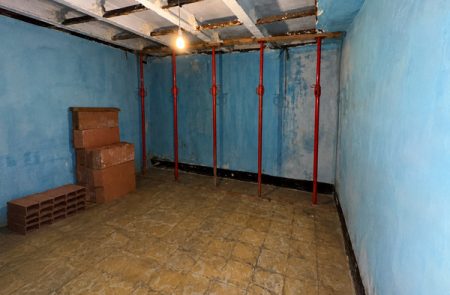
For example, in the case of ground-floor housing, it is essential to correctly address dampness and humidity to guarantee a healthy space. This involves defining specific construction solutions from the project stage, which are key to a successful final result.
3. Check credentials, professional registration, and client reviews
It is mandatory for the architect to be registered with the relevant professional body and to have valid Professional Liability Insurance to cover any professional errors. You can ask for direct references. I usually say that a satisfied client is the best quality audit that exists for any architecture studio.
4. Request and compare at least three different quotes
Compare not only the final price but also what services each offer includes (site visits, permit management, 3D renderings). Be wary of excessively low fees. Often, they hide a lack of dedication that you will end up paying for in errors during the construction management phase.
5. Financial transparency and fee structure
Demand a clear breakdown of payments by phases:concept design, schematic design, construction documents, and project completion. Clarity in cash flow avoids unnecessary tension. We always provide a payment schedule linked to specific project milestones for your peace of mind.
6. The first meeting: communication, empathy, and trust
Assess whether the architect knows how to listen to your ideas and if they are capable of explaining technical concepts in simple terms. Empathy in design is fundamental. You are going to spend many months talking to this person; if there is no “feeling” or you notice they impose their criteria over your needs, look for another professional.
7. Visit previous projects and completed works
If possible, visit one of their works to check the quality of the finishes and how the building has aged over time. Observing the details in person will tell you more about their professional rigor than any retouched photograph. Pay attention to how materials meet and the use of natural light.
Questions to ask the architect in the first interview
Ask about their delivery times, their work methodology, and how they manage budget deviations.
- How many similar projects have you managed this year?
- What exactly does your site supervision/construction management include?
- What is the communication like throughout the design and construction process?
The architecture contract: put everything in writing
A solid contract should detail the scope of the assignment, fees, intellectual property rights, and termination clauses. Never start working without a signed document. The Higher Council of the Colleges of Architects of Spain (CSCAE) provides models that guarantee legal security for both parties.
What are the true functions of an architect?
Their main functions are technical design, obtaining municipal licenses, site management, and ensuring the habitability of the building. The architect looks out for your interests against the construction company. I always emphasize that we are your allies to ensure that what is built is exactly what appears in the execution project.
We analyze the feasibility of your idea, answer your initial questions, and guide you through the first steps with no obligation.
Frequently Asked Questions (FAQ)
Is it mandatory to hire an architect for any renovation?
It is only mandatory by law (LOE in Spain) when the renovation affects the architectural configuration, the structure, or changes the use of the building. In other words, any modification of the layout would already involve hiring an architect.
How much does an architect charge for a housing project?
There are no fixed rates, but they usually range between 10% and 12% of the Material Execution Budget (PEM), depending on the complexity.
What is the difference between an architect and a technical architect (“aparejador”)?
The architect designs and directs the work aesthetically and structurally; the technical architect (also known as a building surveyor or aparejador) is responsible for economic management and material quality control.
Do you already know what style you are looking for for your new project, or do you have any doubts about the procedures? Tell us what you think, and we will help you!