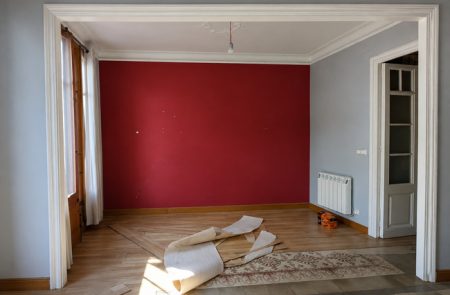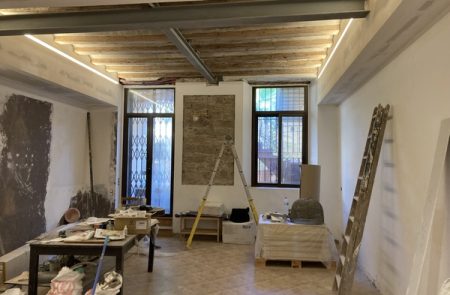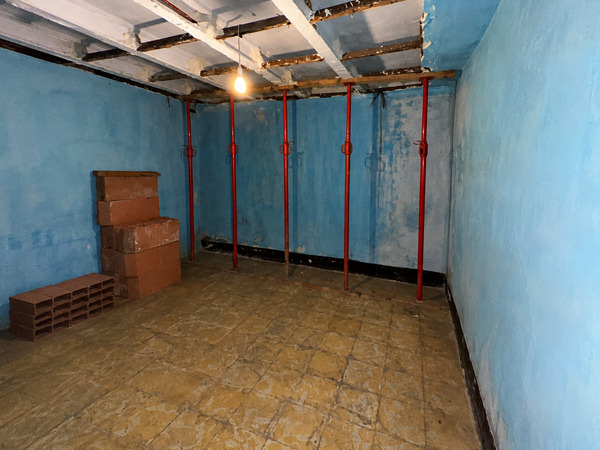
I’ve walked into gorgeous flats hiding a serious problem behind a freshly painted wall. And I’ve also walked into properties that scared people off at first sight, ones that turned out to be structurally flawless. After years renovating homes in Barcelona, you learn not to trust too much what you see in twenty minutes with the seller standing right there.
That’s where this article comes from. A technical home inspection report is the document an architect draws up after thoroughly reviewing a property. It records the property’s actual condition, any defects found, and an objective assessment with photographs. It tells you what you’re really buying, gives you data to negotiate the price, and lets you work out how much the renovation will actually cost before you sign anything.
Today I want to walk you through what that report includes, how it differs from the ITE and from the certificate of habitability (cédula de habitabilidad), because confusing the two can get expensive, who’s qualified to sign it, and why timing matters just as much as the report itself.
What is a technical home inspection report?
A technical inspection report is a document drawn up by a licensed architect or building surveyor (arquitecto técnico) after inspecting a property, reflecting its state of conservation. It records the property’s overall condition, any defects found and their severity, photographs of what was found, and (depending on the type of report) an approximate estimate of repair costs.
But there’s something important to understand: an ITE inspection is fundamentally visual and sensory (organoléptica). No test pits are dug and no finishes are removed unless there are clear signs that justify it. This has caught more than one community of owners off guard when a problem later shows up and they’re told: “but it wasn’t in the ITE.” And that’s true, it wasn’t. An ITE can’t guarantee with 100% certainty that no hidden defect exists.
This happened to us, for example, when we started renovating a ground-floor unit. When we lifted the flooring, we found that the building’s original sewer line (the pipe that collects wastewater and carries it to the main sewer) was completely deteriorated. It had been leaking for decades, washing away the soil aggregate to the point of undermining part of the building’s foundation. It was clearly a shared, building-wide issue, yet it was impossible to detect during an ITE because it was completely hidden beneath the flooring.
What a technical report is not
The concepts get mixed up a lot here, so let’s go through them one by one:
It’s not a valuation. A valuation calculates the property’s market value, usually so the bank will approve the mortgage. It won’t tell you whether there’s a worrying crack in a load-bearing wall.
It’s not an energy performance certificate. That evaluates energy consumption and gives you a rating from A to G. It’s mandatory for selling or renting, but it doesn’t assess the building’s structural condition.
It’s not the ITE. And this one deserves its own section, because it’s the most common mix-up and the one that causes the most trouble.
Differences between the technical home inspection report, the ITE, the certificate of habitability, and the expert report
Four documents, four different purposes. Here’s a quick summary before going into detail:
| Document | Mandatory? | What it covers | Who requests it |
|---|---|---|---|
| Pre-purchase inspection report | No | Your specific home, in depth | The buyer |
| ITE | Yes, at 45 years in Catalonia | Common elements of the building, visual | The property or the community of owners |
| Certificate of habitability | Yes, to sell or rent | Minimum legal conditions of the home | The property |
| Expert report | No | A specific issue, with legal standing | Whoever is making the claim |
The ITE belongs to the building, not to your flat
The ITE (Inspección Técnica de Edificios, Technical Building Inspection) is mandatory in Catalonia for residential buildings once they turn 45 years old, under Decree 67/2015, and it’s repeated every 10 years. It’s carried out by a qualified technician, who draws up the report and files it with the Agència de l’Habitatge de Catalunya (Catalan Housing Agency) to obtain the certificate of fitness. Notaries request it for the sale of properties of that age.
Watch out for this: the obligation kicks in automatically once the building turns 45, no notification letter is required.
The certificate of habitability confirms the home is fit to live in
It certifies that the home meets the minimum requirements for surface area, sanitation, and facilities. It’s mandatory for selling and renting, under Law 18/2007 on the right to housing in Catalonia. It certifies legal minimums, not quality or state of conservation.
The expert report is for making a claim
It’s drawn up once there’s already a dispute and evidence is needed with legal standing for court proceedings. By definition, it comes too late.
The pre-purchase inspection report is the only one designed for you
It’s voluntary, you commission it yourself as the buyer, and it looks at the specific property you’re interested in. It’s the only one of the four that exists to protect you before you sign.
We analyze the feasibility of your idea, answer your initial questions, and guide you through the first steps with no obligation.
What’s the point of getting a report before buying?
To make the decision with facts in hand instead of a hunch. In practice, it gives you four things.
- Knowing what you’re really buying. According to Tinsa, one in four homes in Spain has a serious problem that isn’t visible to the naked eye, with an average repair cost of around €10,000. It’s not bad luck, some things simply aren’t visible during a viewing.
- Negotiating with arguments. A report documenting an outdated electrical installation or rising damp is a negotiating position, not a complaint. It completely changes the conversation with the seller.
- Working out the renovation cost before signing. This is what I value most. Knowing whether the renovation you have in mind will cost €40,000 or €90,000 changes whether that purchase makes sense for you or not.
- Being able to walk away in time. Sometimes the report says no. And that “no,” caught in time, is the best money you’ll spend in the whole process.
Why timing matters: better to know before you sign
My recommendation is to get the inspection done before signing the deposit agreement (arras). Not because you necessarily lose all legal protection after buying, but because before signing, you still have the power to decide.
In Catalonia, the Civil Code addresses these situations through what’s known as “lack of conformity” (falta de conformidad). Currently, the seller is liable for any lack of conformity that already existed at the time of delivery and that becomes apparent within the following three years. What’s more, if it appears within the first two years, in certain cases it’s presumed to have already existed when the property was handed over.
But having the right to make a claim is one thing, and having to actually do it is quite another. If you spot a defect before buying, you can assess how much it costs to repair, negotiate the price, ask for it to be fixed before the purchase, or simply decide the property isn’t for you. If you discover it afterward, the problem is now yours, and even if you can make a claim, you’ll likely need technical reports, negotiation, and, in some cases, lawyers.
That’s why a pre-purchase inspection makes so much sense to me: an architect helps you understand what you’re buying while you’re still in time to decide whether you want to buy it at all.
If the building’s ITE is in order, is everything fine?
Not necessarily, and this belief is one of the costliest ones out there.
The ITE is a visual inspection of the building’s common elements: structure, façades, roofs, and shared installations. Its purpose is to assess their state of conservation and fulfil the maintenance obligation, not to carry out an exhaustive audit of every single home.
And there’s an important limit here: the inspection is visual. No test pits are dug and no false ceilings or flooring are removed unless there are signs that justify it. So a favorable ITE doesn’t necessarily mean there are no hidden defects.
This happened to us while renovating a beautiful flat in a historic building in Barcelona whose ITE was favorable. The home had false ceilings, and when we started the work and took them down, we found that the wet areas (kitchen and bathrooms) had been suffering leaks from the flat above for a long time, and several steel beams were affected. It was a fixable problem, but the structure had to be reinforced during the work, and the client later had to claim the cost back from the community of owners.
So a favorable ITE is useful information, but it’s not an absolute guarantee about the condition of your home. A building can have a valid certificate of fitness while your flat has problems that simply weren’t visible when the inspection took place.
What does a home inspection actually check?
The scope varies by professional, but a thorough inspection covers these areas:
- Structure and foundations: cracks, fissures, tilting, settlement, condition of floor slabs and joists.
- Roof and façade: leaks, sealing, condition of the cladding.
- Damp: source, extent, and possible treatment. Rising damp, condensation, and water infiltration aren’t fixed the same way, and they don’t cost the same either.
- Installations: electricity, plumbing, drainage, climate control, and whether they meet current regulations.
- Joinery and insulation: thermal bridges, windows, thermal and acoustic comfort.
- Planning legality and documentation: making sure what’s actually built matches what’s on record, so you don’t inherit someone else’s violation.
In Barcelona, there are also some very local issues to watch for. In Eixample buildings, we tend to look closely at lightwells, the condition of wooden or steel joists, and previous renovations done without a permit, which are exactly the ones that complicate any future work later on. And they turn up more often than you’d think!
Who can carry out a technical home inspection report?
A licensed architect or building surveyor (arquitecto técnico). This isn’t a formality: their qualification is what allows them to interpret a structural defect, tell a harmless crack apart from an active one, and sign a document with real professional backing.
There’s a second condition that matters just as much as the first: independence. Independent from whoever is selling you the flat, and also from whoever is going to carry out the work. If the same person assessing the condition is also the one billing for the repair, there’s an obvious conflict of interest.
How much does it cost and how long does it take?
Every property is different, and so is the type of review it needs. Visiting a renovated flat in a relatively recent building isn’t the same as visiting a home in a historic building, a single-family house, or a property with extensions and possible planning discrepancies.
That’s why, before carrying out an inspection, we assess the type of property, its size, its age, and the documentation available, to work out what needs reviewing and how broad the report should be.
Either way, the important thing is to do it before you commit to the purchase, leaving enough time to review what we find and, if necessary, request additional documentation or carry out further checks before signing.
How we approach this at Nomadas Architecture
At Nomadas Architecture, we’ve carried out many home renovations, and that changes the way you look at a flat. When you’ve spent years opening up walls in old Barcelona buildings, you know where problems tend to hide and what’s worth keeping from what’s already there.
We work with foreign clients who are buying here without knowing the local regulations or the language, so we walk through the report with them in both English and Spanish, explaining the practical implications of each finding. A report you don’t understand is no use to you.
And there’s something buyers renovating especially value: we can move straight from the report into the project. We already know what we found, what it costs to fix, and what’s worth preserving from what’s already there, which is exactly the part we enjoy most.
We analyze the feasibility of your idea, answer your initial questions, and guide you through the first steps with no obligation.
Frequently asked questions
Is a technical report mandatory to buy a home?
No. A pre-purchase inspection is voluntary. What’s mandatory in Catalonia is the ITE for buildings over 45 years old and the certificate of habitability to sell or rent.
How is it different from a valuation?
A valuation calculates market value, almost always for the mortgage. A technical report assesses the property’s real structural condition. You can have a high valuation and a home with serious defects.
When should I request it, before or after signing the deposit agreement?
Before signing the deposit agreement (arras). Afterward, you’ve already committed money, and your ability to negotiate or walk away is much more limited.
Does it apply if I’m buying new-build property?
Yes. For new-build homes, it lets you document construction defects and claim them within the warranty periods set out in Spain’s Building Standards Act (Ley de Ordenación de la Edificación).
Can I use the report to negotiate the price?
Yes, and it’s one of its main uses. A documented defect with an estimated repair cost is an objective argument for asking for a discount or compensation.
Is it valid for a claim if the defect appears after I buy?
It helps, but it doesn’t replace an expert report.
Before you sign, look under the paint
The idea I’d like you to take away is simple: buying a flat in Barcelona is the biggest financial decision most people will ever make, and it’s still often made with less technical information than buying a used car.
There’s no trick and no magic formula here, just a professional looking with a trained eye at what you can’t see during a viewing.
The four documents, one line each:
- Inspection report: voluntary, your home, for deciding and negotiating.
- ITE: mandatory at 45 years, the building’s, visual.
- Certificate of habitability: minimum legal requirements to sell or rent.
- Expert report: for making a claim once there’s already a dispute.
A couple of final caveats. The market figures cited here (average repair cost, inspection prices) come from industry sources and vary a lot case by case, so treat them as an order of magnitude, not a quote. And ITE regulations are set at the regional level: what’s described here applies to Catalonia, timelines differ in other regions.
So, has buying or renovating a flat ever caught you by surprise, one of those things you only discover once you open up the first wall? Tell us about it in the comments, we love learning from these stories! And if you’re in the middle of a purchase in Barcelona and want to know what you’re getting into before you sign, get in touch and we’ll take a look with you.